Loading...


Insights
Practical tips, user stories, and financial strategies that help you track expenses, organize your finances, and make better spending decisions.
Loading...
We use cookies to analyze website traffic and improve your experience. You can accept or decline analytics cookies. Learn more
Insights
Practical tips, user stories, and financial strategies that help you track expenses, organize your finances, and make better spending decisions.

Artificial intelligence is rapidly becoming one of the most powerful personal finance tools available to households. Its core advantage lies in its ability to analyze large amounts of data, detect patterns, and provide tailored recommendations. For families juggling multiple expenses, unpredictable schedules, and long-term financial goals, AI acts like a tireless financial assistant—always monitoring, reminding, and optimizing.
AI helps households stay on track in three key ways:
1. Real-Time Cash Flow Awareness
AI-driven apps categorize spending instantly, highlighting unusual activity, rising expenses, or areas where the household is drifting off budget. Unlike traditional budgeting tools that require manual input, AI eliminates friction and provides clarity within seconds.
2. Forecasting and Predictive Planning
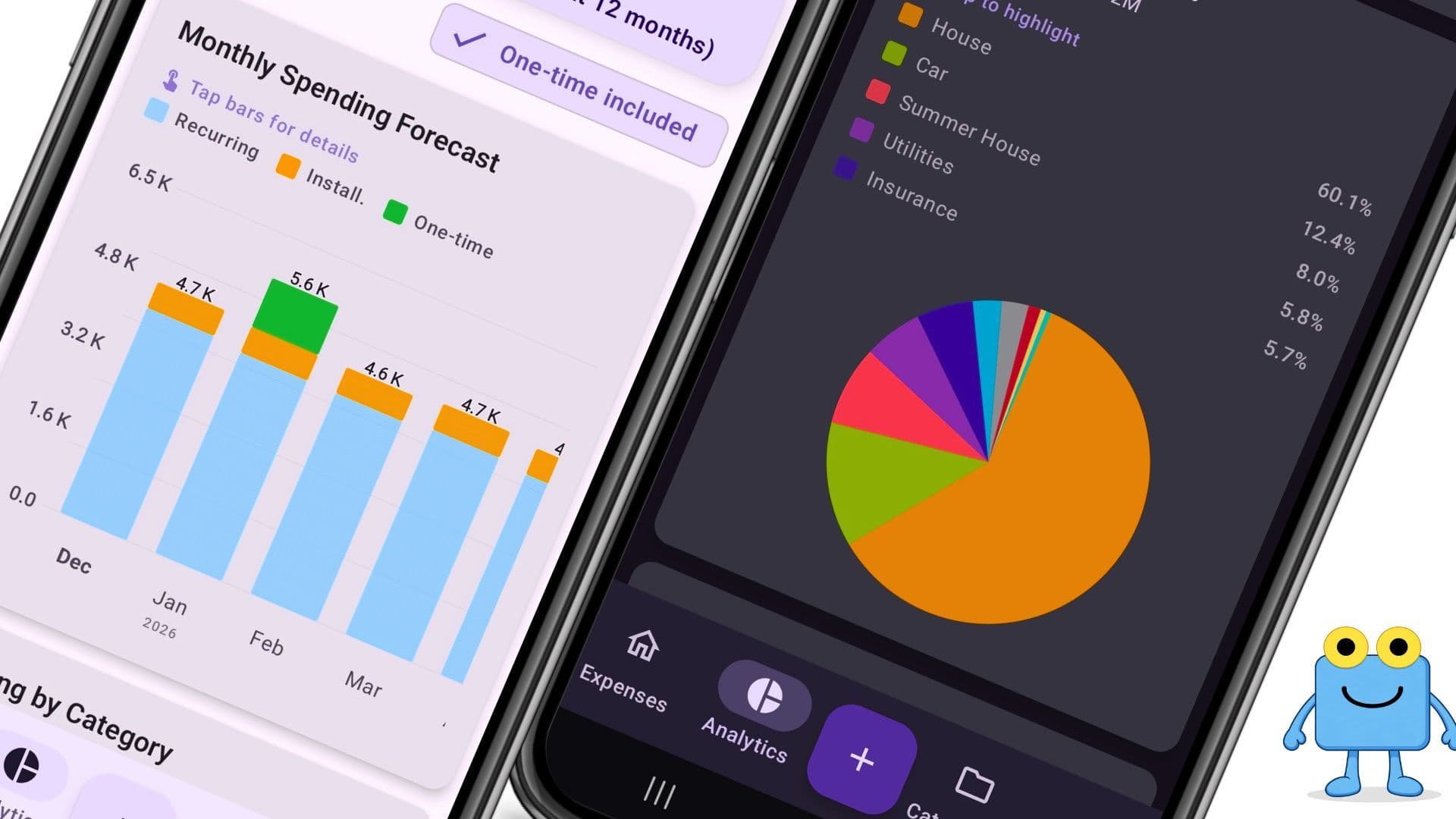
AI can forecast bills, seasonal spikes, subscription renewals, and other predictable events. By analyzing historical data, it warns households of upcoming budget pressure—such as higher winter heating bills or annual insurance renewals—allowing proactive planning instead of reactive scrambling.
3. Personalized Recommendations
Rather than offering generic advice, AI systems tailor recommendations to the household’s lifestyle. For example, if grocery spending increases by 20%, AI can recommend meal planning or switching supermarkets. If unused subscriptions are detected, it suggests cancellations. If the household is falling behind on savings goals, AI offers adjustments to weekly transfers.
More advanced platforms integrate with bank accounts, credit cards, insurance policies, and utility providers, offering a single dashboard for financial management. Some can simulate future scenarios—job changes, interest rate increases, or unexpected expenses—helping families understand potential risks.
AI also strengthens accountability. Notifications act as gentle nudges, and monthly automated reports summarize spending behaviour, financial progress, and areas for improvement. This reduces emotional decision-making and supports consistent habits.
While AI is powerful, households should maintain privacy awareness and choose reputable tools with strong data protection standards. Used responsibly, AI is an invaluable partner for maintaining control, staying aligned with goals, and building long-term financial confidence.
Sources:

Financial stability is built through ongoing awareness, simple habits, automation, clear goals, and confidence gained from small, consistent actions that gradually create security and freedom.
Monthly money check-ins are an essential habit for maintaining financial clarity, preventing overspending, and staying aligned with long-term goals.

Automating savings removes reliance on willpower and ensures consistent progress toward financial security by turning saving into a structured, habitual process.