Loading...


Insights
Practical tips, user stories, and financial strategies that help you track expenses, organize your finances, and make better spending decisions.
Loading...
We use cookies to analyze website traffic and improve your experience. You can accept or decline analytics cookies. Learn more
Insights
Practical tips, user stories, and financial strategies that help you track expenses, organize your finances, and make better spending decisions.
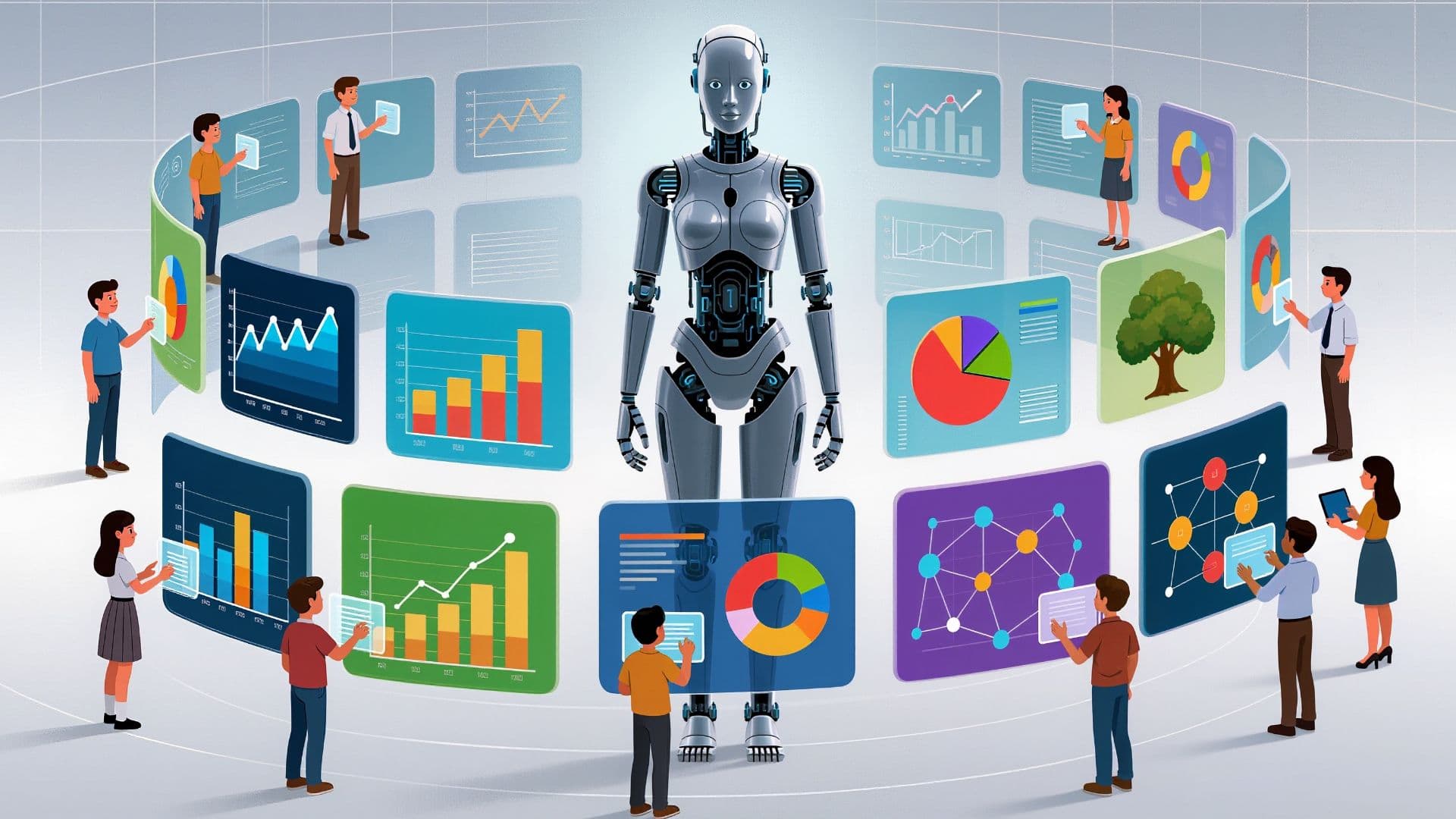
Managing personal finances has never been more important — yet it has also become more complex than ever. People make dozens of transactions every week: groceries, subscriptions, online purchases, transport, and many other small payments that quickly add up. Budgeting apps promise to help users understand where their money goes. However, one of the biggest obstacles remains surprisingly simple: manual categorization of expenses.
For many users, this is where the budgeting process breaks down.
When people must manually assign categories to every transaction — selecting “groceries,” “transport,” “entertainment,” or “subscriptions” — the process becomes repetitive and time-consuming. What starts as a helpful tool quickly feels like additional work. In practice, most users stop categorizing transactions after a few days or weeks. Once the categorization stops, the insights disappear, and the budgeting app loses its purpose.
This is exactly where modern technology should step in.
Today, automatic expense categorization should be a standard feature of any financial app. With the help of artificial intelligence, machine learning, and transaction pattern recognition, systems can already identify spending types with a high degree of accuracy. When a transaction from a supermarket appears, the system should automatically classify it as groceries. A payment to a streaming platform should instantly appear under subscriptions. A charge from a fuel station should go directly to transportation.
Users should not need to teach the system something that technology already understands.
In fact, many modern budgeting apps are already moving in this direction. By analyzing merchant names, transaction history, and spending patterns, apps can automatically assign categories and continuously improve their accuracy over time. When users rarely need to intervene, the budgeting experience becomes dramatically simpler.
This approach also aligns with an important principle in behavioral economics: people engage more with systems that reduce cognitive effort.
Financial management is already mentally demanding. People must think about income, bills, future expenses, savings goals, and unexpected costs. Adding the requirement to manually label every transaction only increases friction. The more steps a user must take, the more likely they are to abandon the tool entirely.
Automatic categorization removes this barrier.
Instead of spending time organizing transactions, users can immediately see meaningful insights:
These insights are exactly what budgeting tools are meant to provide. The technology should handle the administrative work behind the scenes.
It is worth noting that not all financial apps are fully there yet. Some traditional banking applications still rely heavily on manual categorization or offer only basic automated suggestions. While many banks are improving their digital tools, the pace of innovation is often slower than in dedicated fintech and budgeting apps.
This is why many independent budgeting apps are currently leading the way. These platforms increasingly integrate AI-based categorization, smart rules, and automatic recognition of recurring expenses. Over time, the system learns from user behavior and becomes even more accurate.
For users, the benefit is simple: less work, clearer financial overview.
In the coming years, automatic categorization will likely become the norm rather than a premium feature. Just as smartphones automatically organize photos or email clients filter spam without manual input, financial apps should automatically structure spending data in the background.
Manual categorization may still exist as an optional adjustment — allowing users to correct a category when needed — but it should no longer be the default requirement.
Ultimately, the goal of financial tools should be to make money management easier, not more complicated. If budgeting apps want users to stay engaged, they must remove unnecessary friction and let technology handle repetitive tasks.
Automatic expense categorization is no longer a luxury feature.
It is becoming the new standard.

This article explains what budgeting and expense apps do, what they track, where they’re popular, and how people use them to manage their finances.
AI-based savings recommendations are becoming a critical tool in navigating rising household costs.

Between 2026 and 2028, global households will experience a combination of rising electricity costs, steady internet price inflation, and shifting mortgage landscapes.